
When patients ask Mr Shah what makes a good hip replacement, they’re usually thinking about the surgery itself – the technique, the recovery, the result. But one of the most important decisions happens before any of that: the choice of implant.
It’s not something patients always think to ask about – but it plays a significant role in how long a hip replacement lasts.
The implants Mr Shah uses
Mr Shah uses two implants manufactured by JRI Orthopaedics – the Furlong® H-A.C. and the Furlong Evolution® – for his hip replacements. Both are uncemented stems, meaning neither relies on bone cement to hold them in place.
Instead, each is coated with hydroxyapatite ceramic (H-A.C.), a material that encourages the surrounding bone to grow naturally onto the implant over time. As the bone bonds with the coating, the implant becomes increasingly secure – fixed biologically rather than mechanically. JRI developed the world’s first hydroxyapatite ceramic coated stem, and both implants are the product of 40 years of clinical refinement.
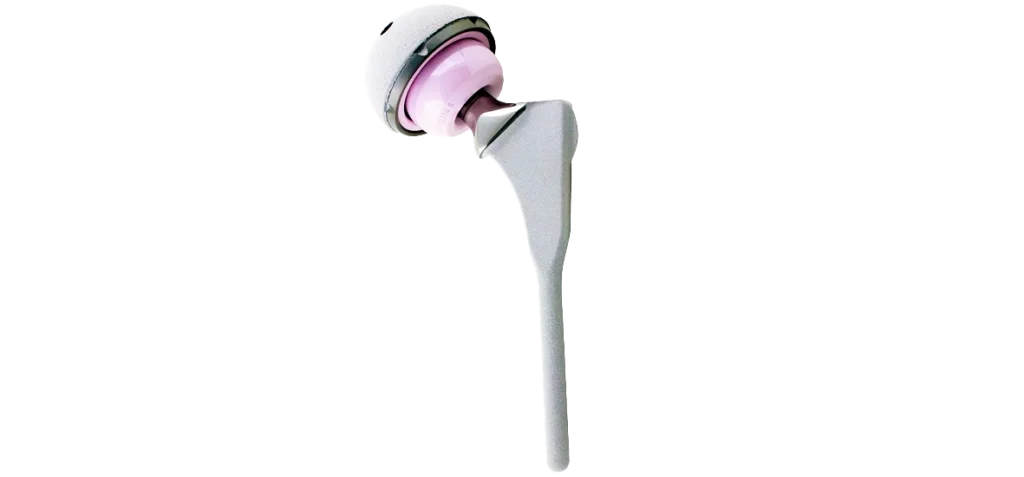
The Furlong® H-A.C.
The Furlong® H-A.C. is the original collared, fully hydroxyapatite coated stem. Its coating is applied using vacuum plasma spray technology, which produces a denser, more durable surface that resists the cracking and delamination seen in some other manufacturing processes.
The long-term clinical data behind it is compelling. A study published in Bone & Joint Open in 2024, co-authored by Mr Shah, reported a 100% survival rate of the Furlong® H-A.C. femoral stem for aseptic loosening at 27 to 32 years – meaning not a single implant in the study needed to be revised due to loosening over a follow-up period of nearly three decades. The implant also holds an ODEP 15A* rating, the highest rating awarded by the Orthopaedic Data Evaluation Panel, which independently assesses implant performance based on long-term clinical data.
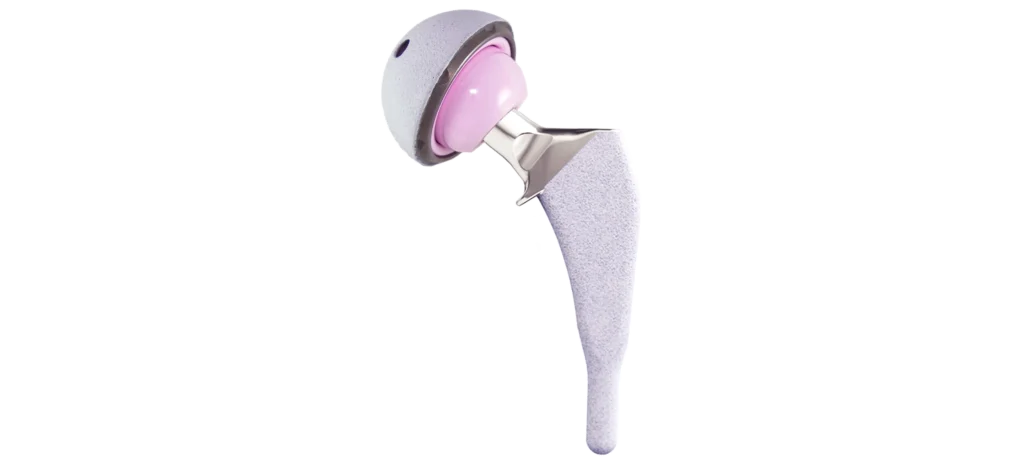
The Furlong Evolution®
The Furlong Evolution® is a bone-conserving femoral stem that allows for precise restoration of joint biomechanics. Like the H-A.C., it uses the same proven hydroxyapatite ceramic coating and benefits from the same biological fixation principle – encouraging natural bone growth onto the implant for long-term stability.
Why cement-free matters
The alternative to an uncemented implant is one fixed with bone cement. Cemented implants can work well, but cement can deteriorate over time – particularly in younger or more active patients. For those in their 40s, 50s or 60s who may have many active years ahead of them, this can increase the likelihood of needing revision surgery further down the line.
With both the Furlong® H-A.C. and the Furlong Evolution®, the bone grows into the coating rather than relying on an intermediary material. Over time, the implant effectively becomes part of the skeleton – which is why the long-term results are so strong.
It’s also worth knowing that not all surgeons use uncemented implants. They require precise positioning and a thorough understanding of how the implant behaves as the bone integrates around it. Mr Shah has performed more than 15,000 operations and has used JRI implants for the last 19 years, giving him a level of familiarity that directly benefits his patients.
The bigger picture
Implant selection is one part of what determines the long-term success of a hip replacement – alongside surgical technique, accurate positioning and the experience of the surgeon. But it’s a part that patients rarely get to hear about, and one that Mr Shah is always happy to discuss.
If you’d like to know more about hip replacement and what Mr Shah’s approach involves, get in touch to arrange a consultation.